Recent visit to Paris and my first visit to Musée des Arts Décoratifs has inspired me to rekindle this blog with exhibits that I came across in the Musée, which has charmed and captivated my interest to read/ research further on them. Come join me on this journey- will you?
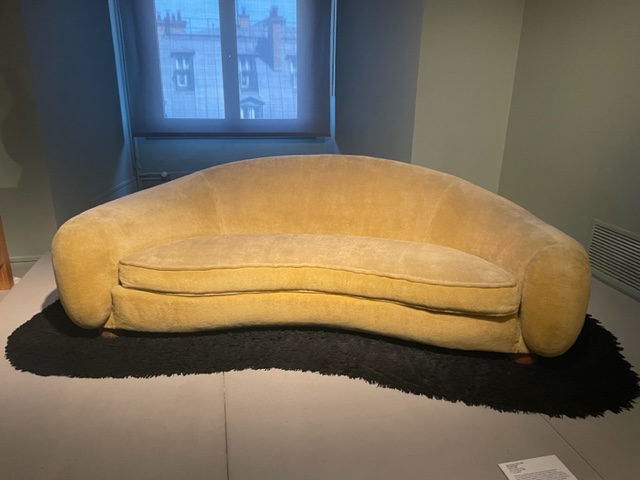
The first piece of research is on Boule- Jean Royère’s iconic rotund sofa. Royère started his career in the 30’s and in the early 70’s, when he was renovating his Mother’s apartment, part of the grand redo was the birth of the Boule – which latter inspired the charming nickname – Ours Polaire – “polar bear”. The rotund sofa was covered in fuzzy velvet, with its rather atypical shape created with wooden interior skeleton similar to those used in Louis XVI sofa– created a huge wave of awe and interest when it was exhibited at one of Paris’s Art and Industry exhibition. It’s believe that only 150 of these sofa has been made, thus the rarity and the skyrocketing price of each sofa. The price for these sofa and chairs can go up a million and 600,000 for a chair on its on.
According to French decorator Francois Catroux, – “the allure is simple – they’re unusual, they’re beautiful, they’re rare, and everyone looks so elegant and relaxed sitting on them”. I believe the allure of the sofa comes from not the lack of structure but the creation of volume and contours.
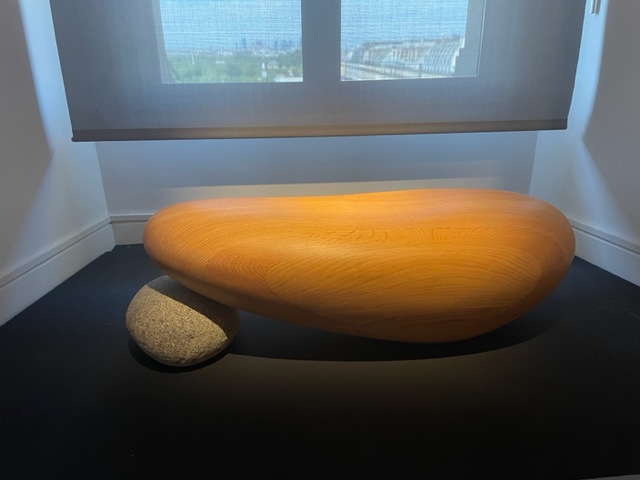
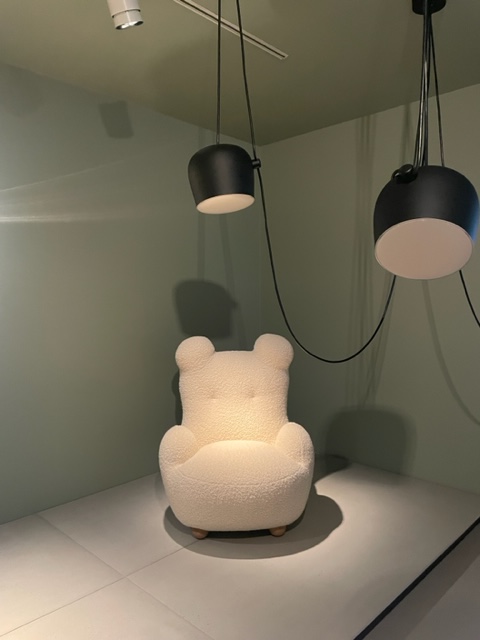
The curation of this particular exhibit – aimed to demonstrate the impact of Jean Royère’s design in the current and possibly future, despite new age / contemporary designers may not necessary cite this legacy. Two references made were of Benjamin Graindorge and his use of straw marquetry with natural colors of wood – this SoftWildSoft (not featured in the exhibit) bears resemblance to Royere’s unstructured shape, which Graindorge has smartly labelled it as biomorphic with no clear way of using it, which in some ways a reflection of how contemporary designs has evolved to suit the un-measureable potential of things …and life (I guess). The other reference is to Pierre Yovanovitch, who has endearingly added a tender roundness to his designs (link 2.) – and created a quirky ease to the furniture, one that you wouldn’t mind popping down on after a long day out.
To bring it full circle on Royère’s voluptous free form, the exhibit cites fashion – especially with designers such as Rei Kawakubo for Commes des Garcons for embracing this shape via form fitting and expansive dresses.

 J-emine's reflexionando
Leave a comment