Jiyoung became different people from time to time. Some of them were living, others were dead, all of them women she knew. No matter how you look at it, it wasn’t a joke or a prank. Truly, flawlessly, completely she became that person
Kim Ji Young, Born 1981 – Cho Nam- Joo
I completed the novel last night – taking my quiet time to relish every few pages or a chapter every night before bed this week. After lunch today, I proceeded to watch the movie with the novel next to me – as I flip back to compare some of scenes and imagery between film and novel. Personally, I found some of the scenes in the film reverberating, in contrast to the portrayals of either people or scene within the novel – which seemed at times very clinical. In the beginning of the novel, we see Jiyoung slip into two identities – a friend that died giving birth and her own Mother – followed by her husband seeking psychiatric treatment for her (in the film, the husband is seen googling for advice on ” being possessed”, which also denote the aged justification and handling of anything related to mental illness). With Jiyoung’s acceptance of treatment – the novel propels into a chronological order of accounts and events of Jiyoung’s story, as recorded by her psychiatric doctor. [A gender interplay of the psychiatric doctor is evidence in both film and novel]
The clinical, dispassionate third-person account, annotated by reports from newspapers and official demographic data, catalogues the systemic oppression she has faced. At school, boys eat first, and she suffers sexual harassment and victim blaming. In the workplace, she has first-hand experience of the gender pay gap (“women working in Korea earn only 63 per cent of what men earn”). And while performing the uncompensated, costly work of motherhood, she is horrified to hear herself denigrated as a parasitic “mum-roach”.
Kim Jiyoung, Born 1982 review – South Korean #MeToo bestseller (The Guardian)
Only towards the end of the novel, do we have a thorough understanding of the catalyst that has triggered the deep-seeded suppression swirling within Jiyoung’s psyche, which find its roots, in a culture that has been profoundly embedded with rules and customs, smudge with gender favouritism, discrimination and violence. Whilst in the film, certain pivotal events are first played out, giving the audience a better sense of the trigger – couple with stronger portrayal of silent but impactful characters such as Jiyoung’s mother, who also has been time restricted and desires a different future for her daughters, in one particular scene – the Mother’s meltdown towards her husband, surface his own discrimination towards his children, which he was not fully aware. The treachery of discrimination is unconsciously enforced, even if the world and people have progress. References to Korea’s socioeconomic events and positioning helps to sheds that somethings are still curtail by external growth.
Kim Jiyoung could be someone we know or we may have at some point, experienced what she has undergone – a certain remark, a set belief or expectation – despite our progressive environment and upbringing. May we take a step back and asked have we internalised something as normal, rather than a by-product of culture, discrimination or just plain, expectations.
I particularly liked the following statement, which in its own way accords the tension of introducing to the present society the Kim Jiyoungs of today and yesterday, by Jamie Chang- a professor at Ewha Woman’s University who translated the original book into English;
“There was a significant amount of internalized misogyny that I had to face up to in order to translate this book.”
Kim Ji-young, Born 1982: Feminist film reignites tensions in South Korea (BBC.com_
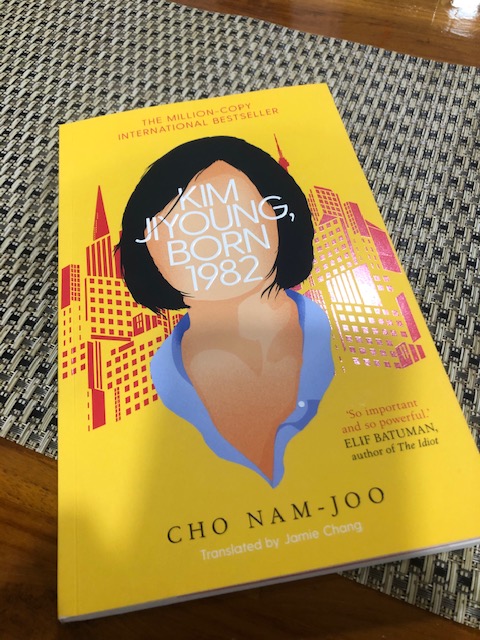
And, if I must admit – I prefer the film over the novel, but enjoyed the experience of cross-referencing between the two.
Articles:
https://www.bbc.com/news/world-asia-50135152 ; https://www.theguardian.com/books/2020/feb/19/kim-jiyoung-born-1982-cho-nam-joo-bestseller-review
 J-emine's reflexionando
Leave a comment