At the point where I learned what I was fighting, loving , I knew that I was bound, in the end to lose. I dispensed with the formalities of tenderness, pity, the ceremonial flattery that should go before disciplined massacre. I fought, I suppose, like a woman uttering distracting cries, making false moves, hitting below the belt.
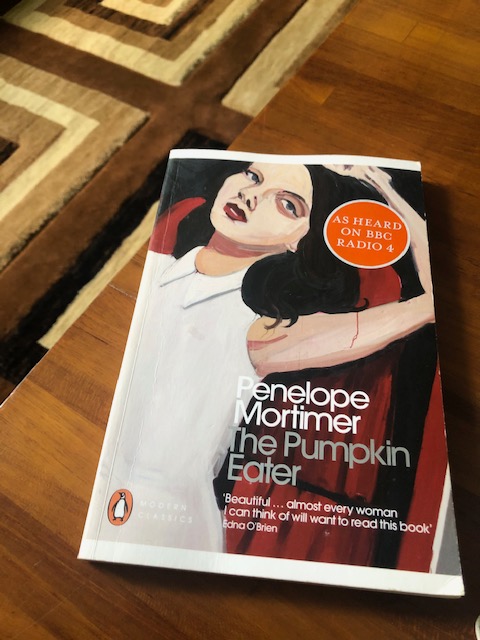
The Pumpkin Eater (1962) by Penelop Mortimer
It took awhile for me to complete the second book of 2020, am hoping the velocity of reading shall pick up now that I have officially completed my last paper of the MBA program. Whilst work will always be a priority – a semblance of normalcy will need to be strike, a constant reminder to self on this.
The Pumpkin Eater is a short and evocative tale of Mrs. Armitage (we don’t know her real name) whom has married a few times with a brood of children. Her third husband, Jake is a successful scriptwriter with a trail of infidelities. Mrs. Armitage had a breakdown in the aisle of Harrods, primarily as result of the deep-seeded beliefs, responsibilities and constraints within her life and the barnacles that has circled her heart.
The language is rich specked with dry, wryly humour as it sheds light on a singular description of Mrs. Armitage’s depression. There is a languid air that enfolds chapter after chapter, as Mrs. Armitage’s flows through her own interactions with her children, making sense of her husband’s infidelity, the privilege life that has been bestowed with her husband’s rise in fame etc. Mrs. Armitage knows no other way to break though these barnacles or live a different life – as she was born to breed, clean up and not meddle with her husband’s affair. Despite the flaws, the idyllic portrayal of the tower they are building in the countryside for the family, whether it’s an elusion to allow Mrs. Amritage to cling onto as her inner world collapse is debatable.
The Pumpkin Eater was Mortimer’s most famous novel which was adapted to screen, and touted as a loosely autobiographical story of Mortimer’s life. A woman well-beyond her years whom also married several times with a brood of children – trying to a-figure her role as a daughter, wife, mother and her own identity.
A short but crushing look at how a woman’s small world is crushing before her despite her earnestness to hold onto what she thinks is right or expected of her – or even as she rightfully concluded:
Some of these things happened, and some were dreams. They are all true, as I understood truth. They are all real, as I understood reality.

 J-emine's reflexionando
Leave a comment